
Song Huizong's strange rocks and Monet's water lilies are juxtaposed in the Forbidden City's new exhibition of garden culture
Huizong’s Auspicious Dragon Stone and Monet’s Water Lilies share a Palace Museum garden-culture exhibition.
On April 1, “Enjoy the Forests and Springs,” co-organized with the Art Institute of Chicago, opens across the Meridian Gate halls. Emperor Huizong’s Auspicious Dragon Stone scroll and Monet’s Water Lilies hang in one garden-culture dialogue—Chinese strange rocks beside French Impressionist water.
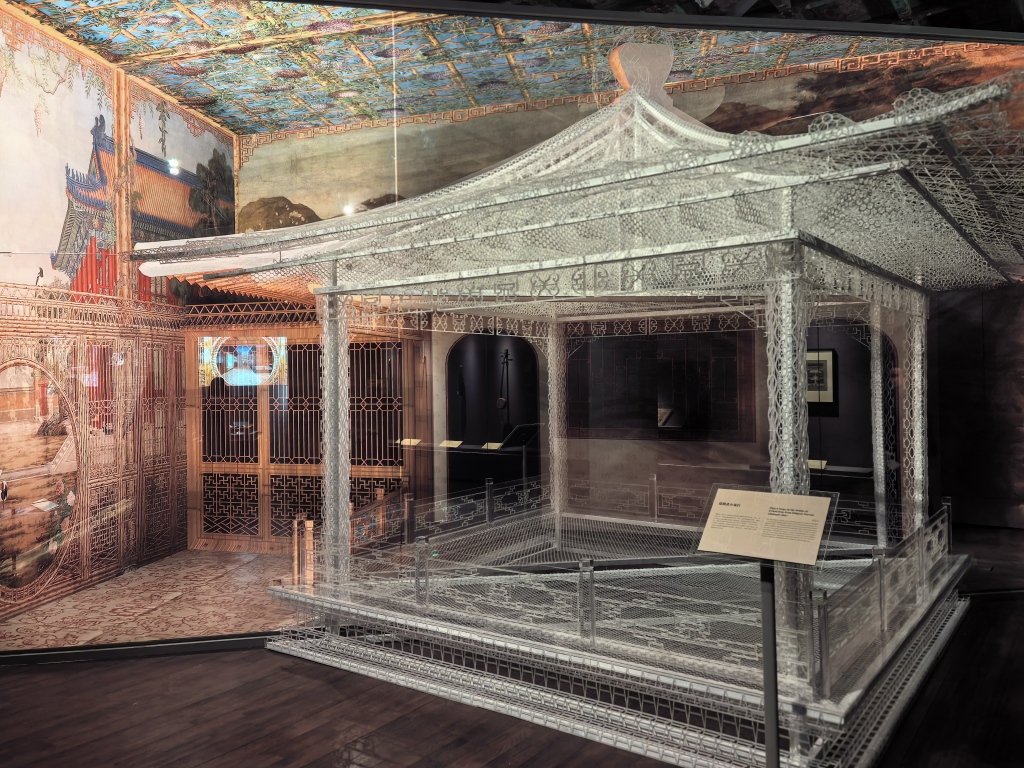
Exhibition Hall Scene
The theme of the exhibition, "Enjoy the Forest and Springs", is taken from the poem written by Emperor Qianlong on the exhibit "Gaotu Jingshe Picture Scroll". "Linquan" is the poetic expression of natural landscapes by ancient Chinese people, and "enjoy" the "linquan" is the pursuit of living in the garden.
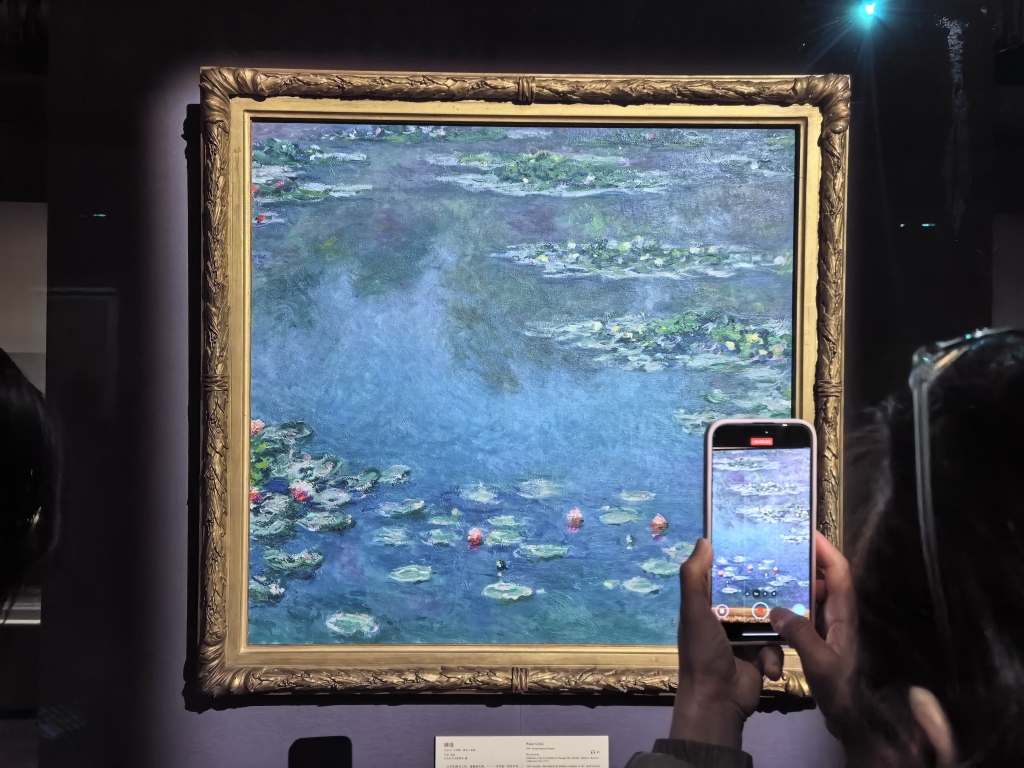
Water Lilies, Claude Monet, exhibition view
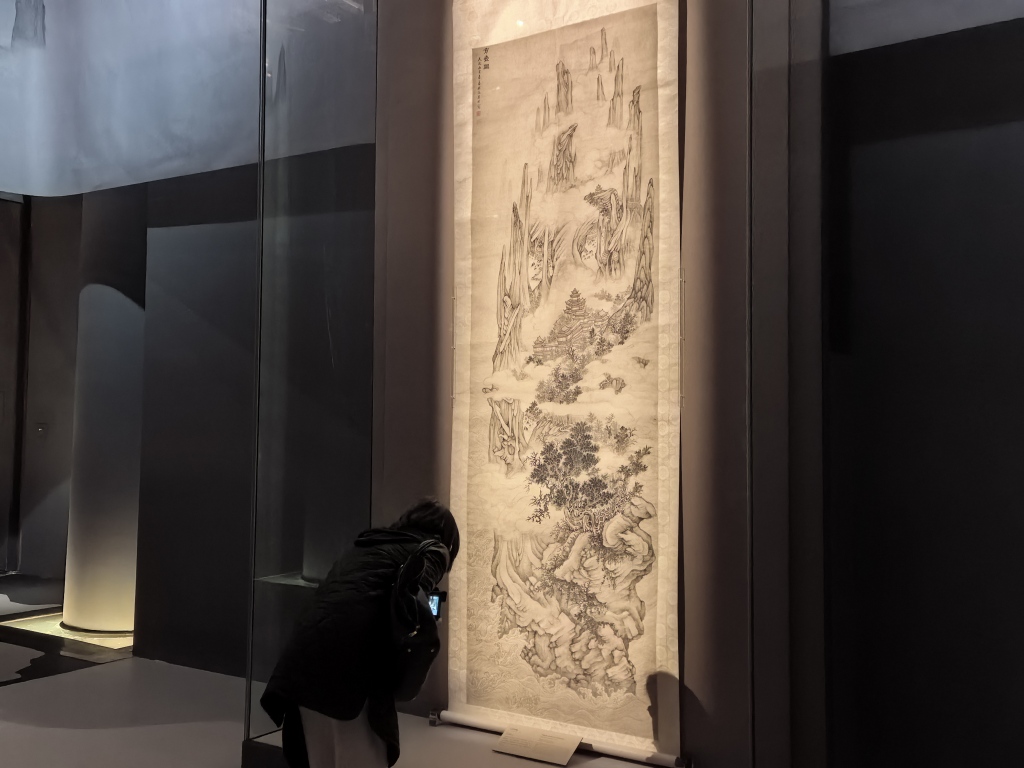
Ming Dynasty, “Square Pot Scroll”, exhibition view
The exhibition is divided into six major units. Through six garden elegant events, namely "Gatherings", "Collecting", "Mountain Tours", "Quiet Cultivation", "Viewing Flowers" and "Enjoying Music", more than 200 representative Chinese and foreign exhibits are selected, which cleverly integrate garden landscapes with elements such as literature, drama, and historical allusions. Based on Chinese classical gardens and looking at global garden culture, it unfolds a dialogue across time and space, presenting the artistic beauty of Chinese and foreign gardens and revealing the humanistic philosophy contained therein.
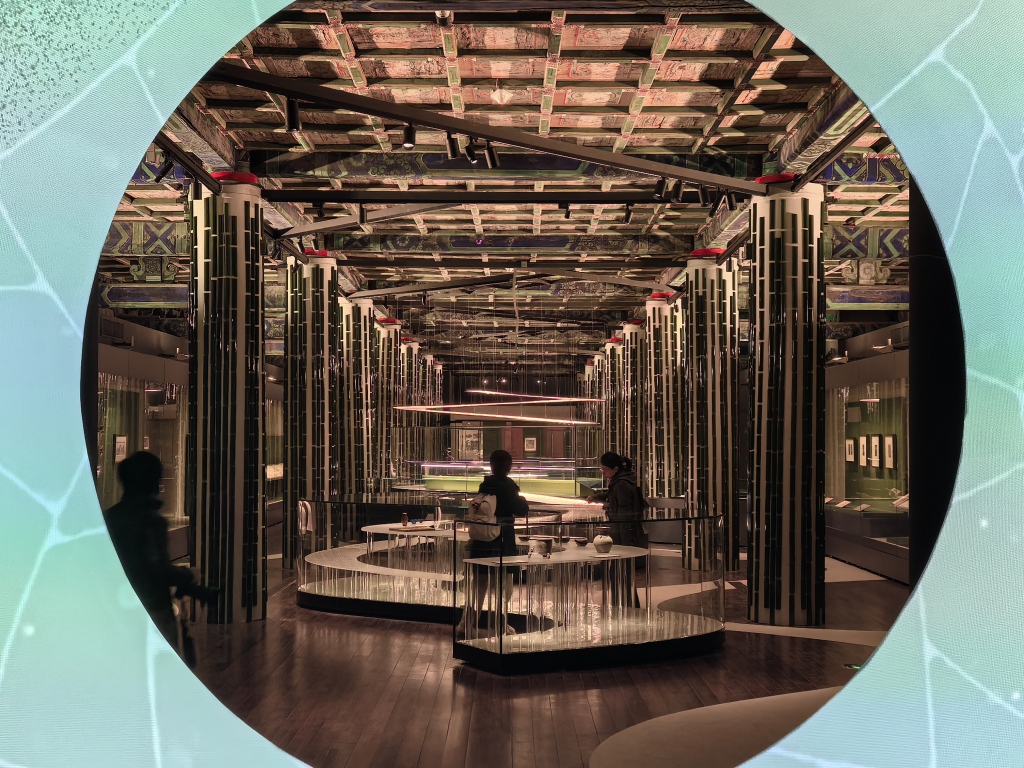
Exhibition Hall Scene
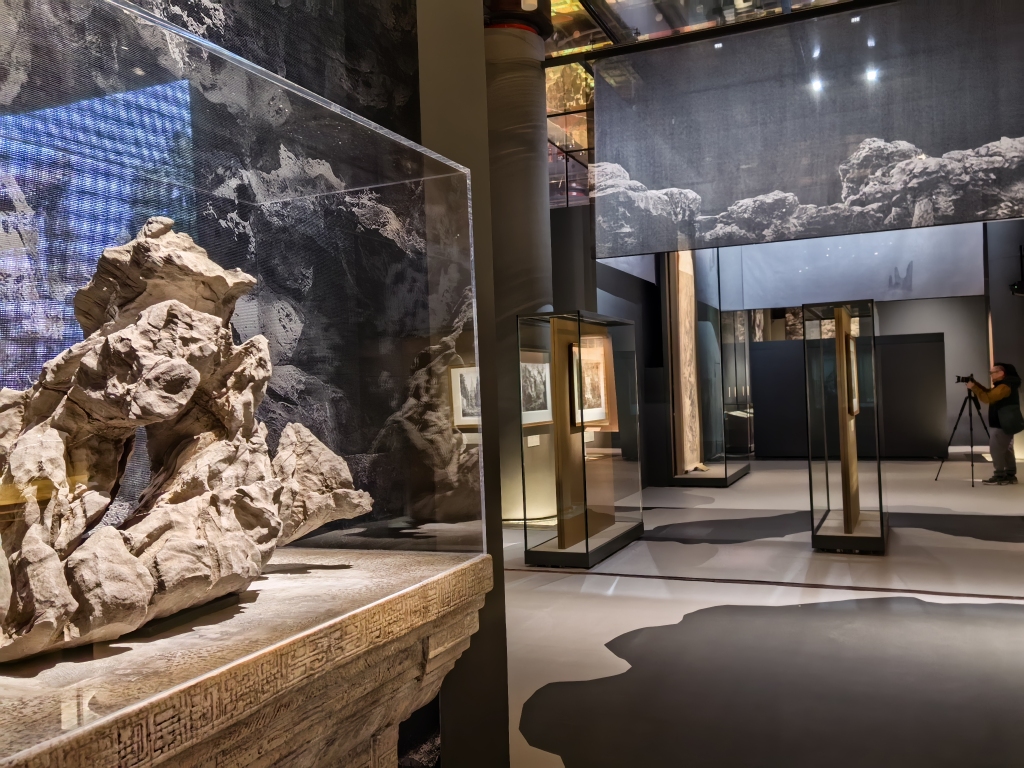
Exhibition Hall Scene
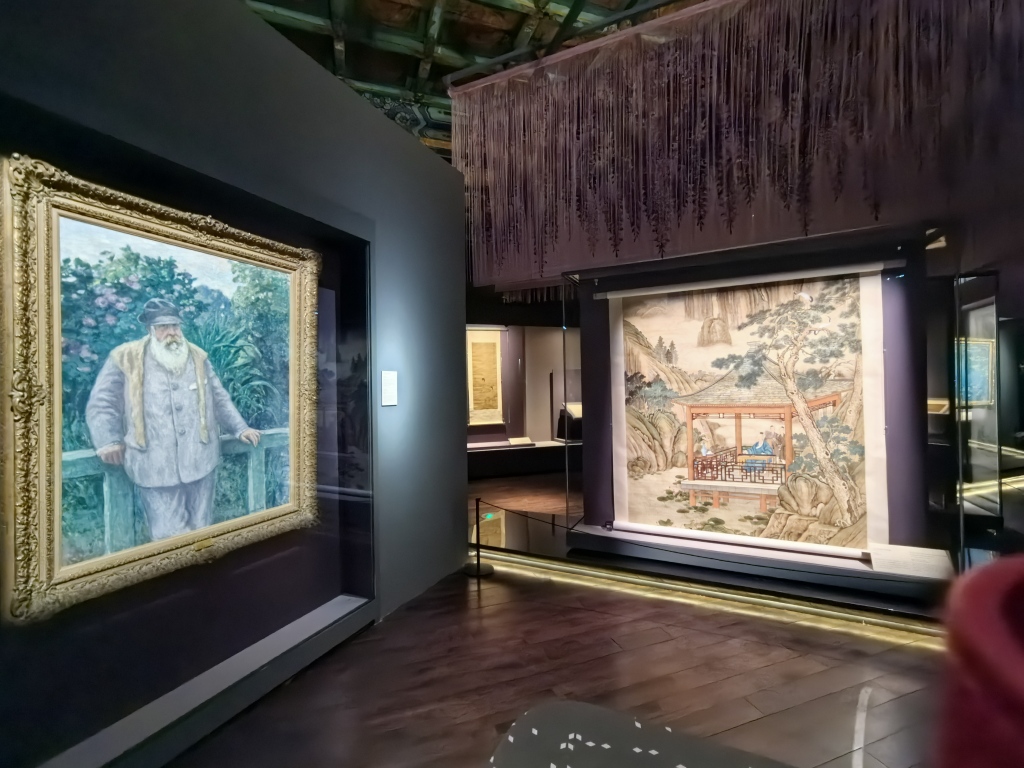
Exhibition Hall Scene
Visitors can enjoy garden-related artworks such as the private garden of Wang Shen, a scholar in the Northern Song Dynasty, where the legendary Xiyuan Gathering took place, the Dinghui Temple in Suzhou during the Ming Dynasty, and the Qianlong Garden built by Emperor Qianlong after he went to the south of the Yangtze River, imitating the gardens of scholars in the south of the Yangtze River and integrating the gardens of the northern court. Visitors can also enjoy foreign gardens of different styles, such as the gardens of Pompeii Villa, the gardens of medieval monasteries, the gardens of the Palace of Versailles in France, the gardens of the Edo period in Japan, and the Monet Garden. In terms of display techniques, architectural stencils, restoration models, and historical space reproduction are used to vividly explain the wisdom of the construction of the Forbidden City gardens.
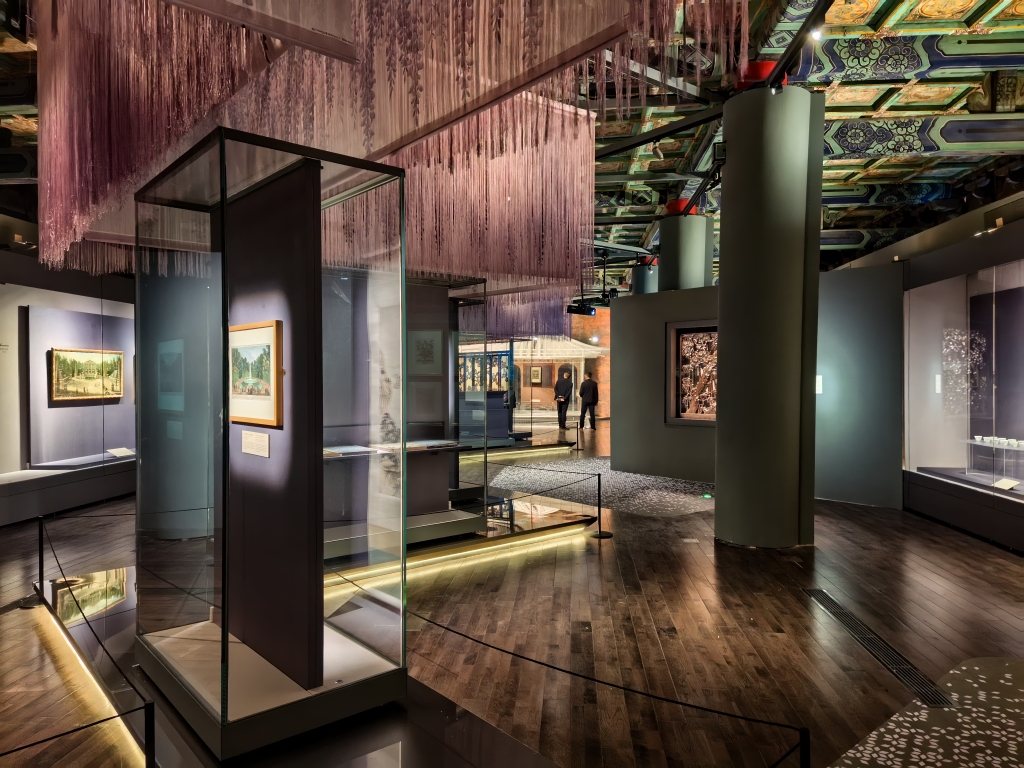
Exhibition Hall Scene
The more than 200 cultural relics on display include paintings and calligraphy by famous Chinese masters of all dynasties, antiques and antique furniture from the Qing Palace, as well as Western oil paintings, sculptures, Japanese Ukiyo-e, Persian miniatures and other exotic masterpieces. Among them, 70 precious cultural relics come from the Art Institute of Chicago, the Metropolitan Museum of Art, the Yale Center for British Art, the Palace of Versailles, the National Museum of China, and the Tianjin Museum. Professor Zhu Yufan of the Department of Landscape Architecture, School of Architecture, Tsinghua University, and his team participated in the exhibition's co-planning. The exhibition was assisted by the Beijing Palace Museum Cultural Relics Protection Foundation.
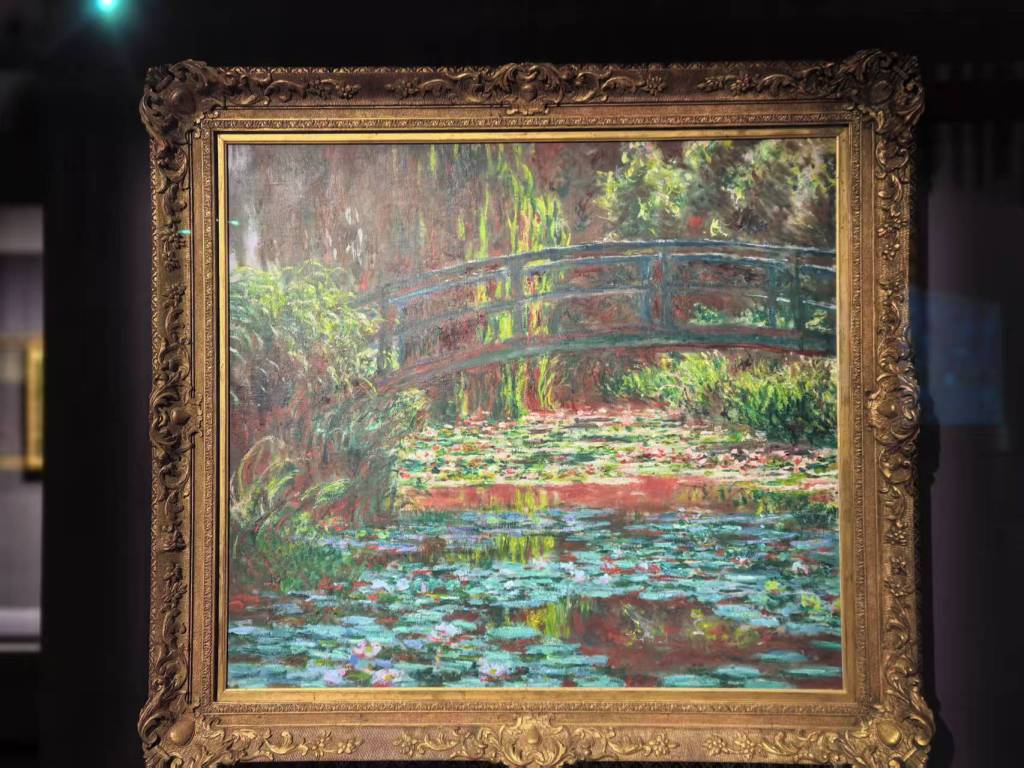
Water Lily Pond, Claude Monet, exhibition view
This exhibition also opened the Chonglou in the northeast of Wumen as a cultural and creative exhibition hall, creating an immersive cultural and creative exhibition space for the audience through the integration of abstract creation and Lang Shining's "Flower and Bird Album". Dozens of garden-themed cultural and creative works inspired by Kangxi-style colorful twelve-month flower pattern cups, green satin embroidered osmanthus rabbit and golden ball pattern flower god clothes, Monet's "Water Lilies", Katsushika Hokusai's "Ballit and Dragonfly" and Henry Fletcher's "Twelve Months Flower Order" were unveiled, cleverly integrating traditional culture with the innovation of modern design.
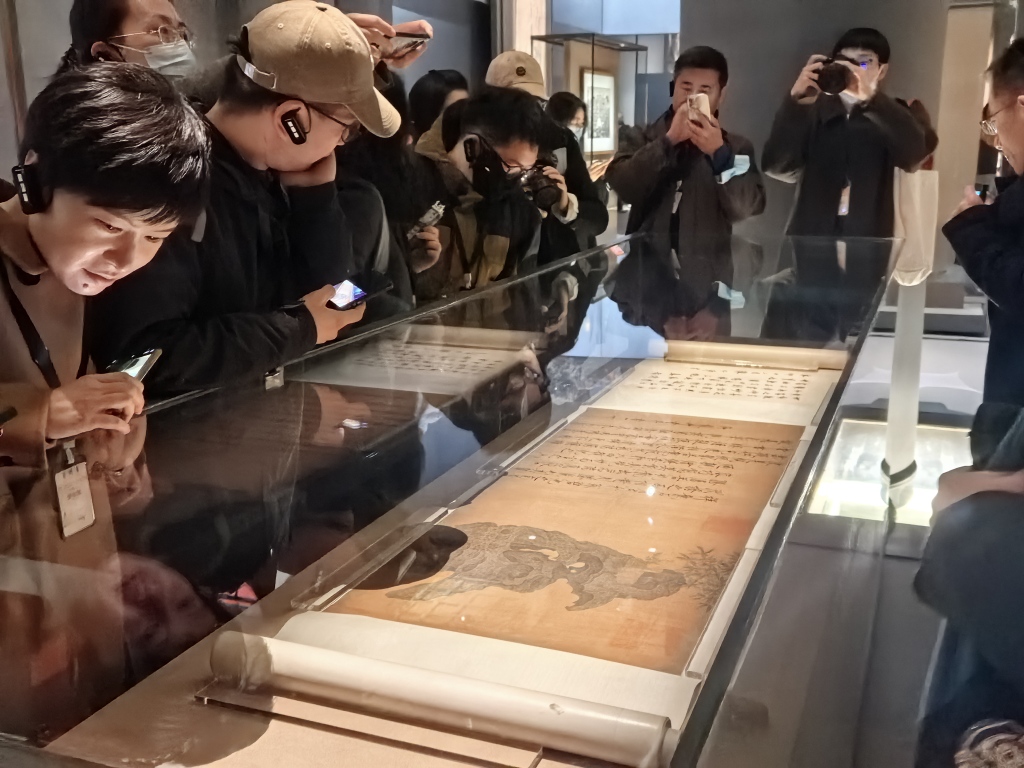
Song Dynasty, “Auspicious Dragon Stone Scroll”, exhibition view
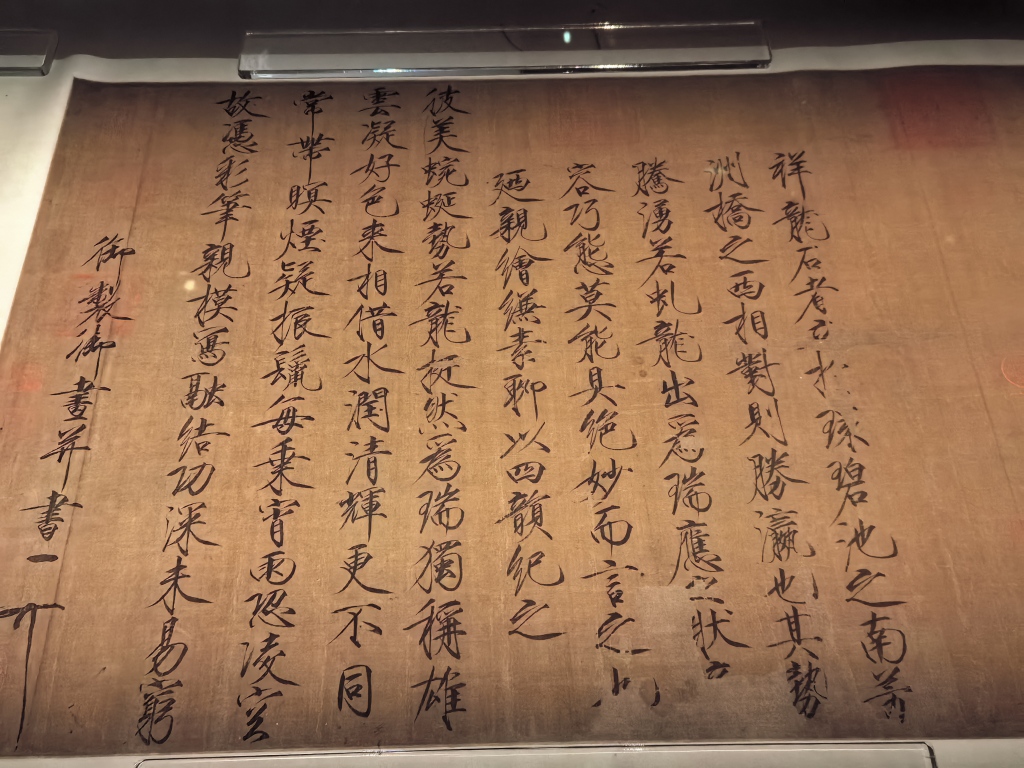
Part of the Auspicious Dragon Stone Scroll, Song Dynasty, by Zhao Ji
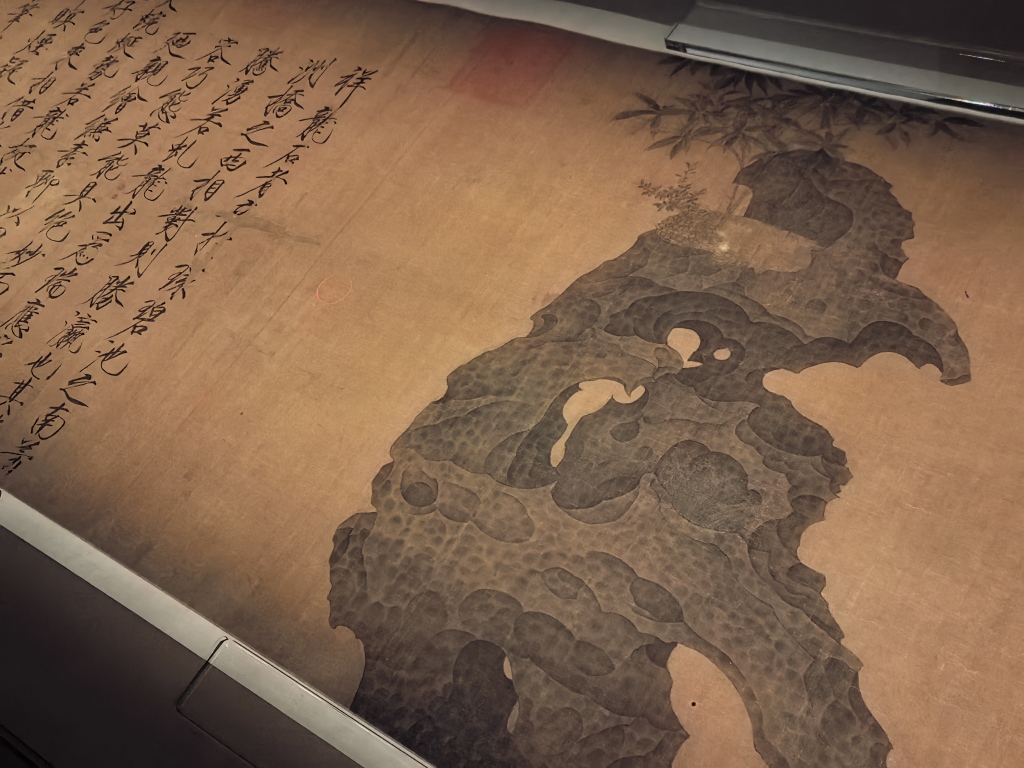
Part of the Auspicious Dragon Stone Scroll by Zhao Ji, Song Dynasty
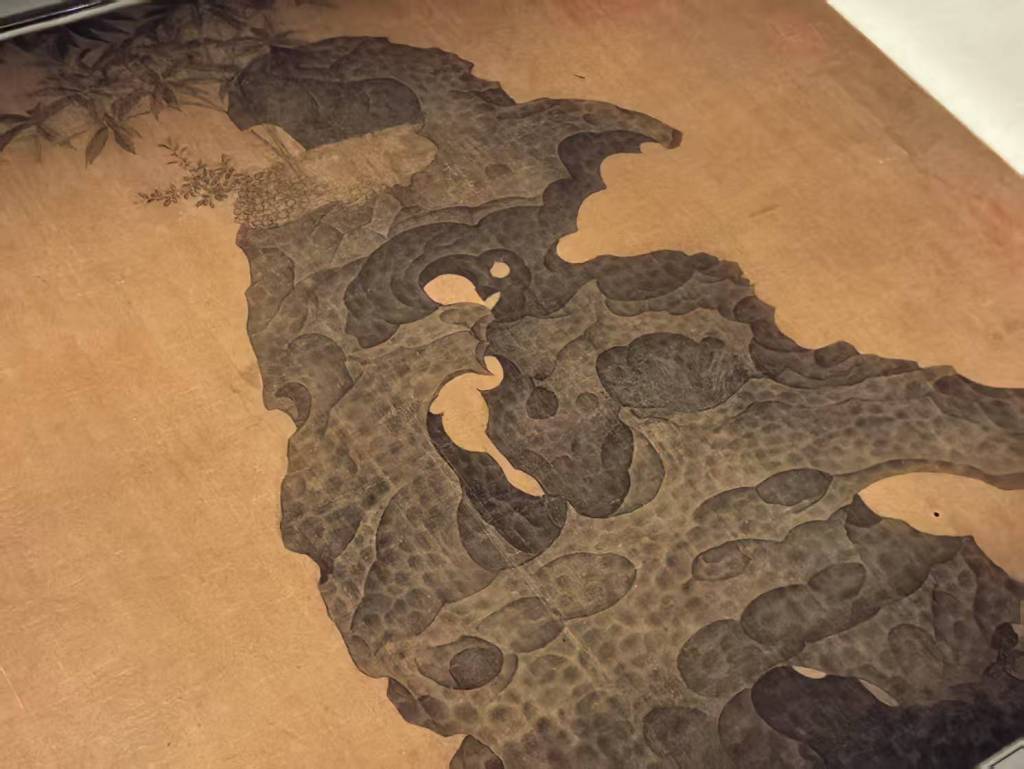
Part of the Auspicious Dragon Stone Scroll by Zhao Ji of the Song Dynasty
The exhibition catalogue of the same name, "Le Lin Quan: Chinese and Foreign Garden Culture Exhibition", is expected to be published in April 2025. The book is divided into exhibition and research. The exhibition section presents all the exhibited cultural relics in high-definition format, and the research section includes eight academic articles from seven scholars from the Palace Museum and Tsinghua University, which conduct research and discussion on Chinese and foreign gardens from multiple perspectives such as architecture, gardens, cultural relics, and art.
The exhibition is accessible with a ticket to the Palace Museum and will last until June 29. Visitors can make a reservation with their real name through the “Palace Museum” WeChat mini-app.

Monet’s garden arrives at the Forbidden City gate
Impressionist gardens at Meridian Gate—Monet’s light staged against the Palace Museum walls.

Li Song’s “Soldier” opens Forbidden City figures
Song dynasty “Soldier” leads a Palace Museum hang of figure painting across dynasties.

Song Huizong and four Song masterpieces in Zhejiang
Huizong and four Song landmarks in one Zhejiang room—court taste and masterpiece status.